

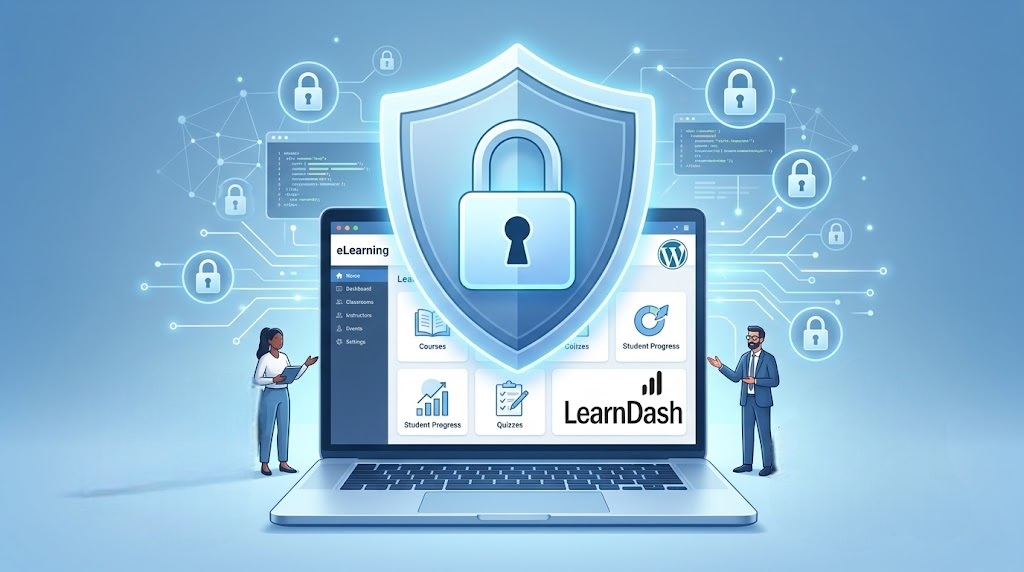
In today’s digital age, Learning Management Systems (LMS) are central to eLearning. However, as these platforms grow in popularity, they also become targets for cyberattacks. Ensuring LMS security is crucial to protect sensitive learner data, maintain trust, and keep your platform running smoothly. Using WordPress based LMS solutions can simplify security management while providing flexibility for customization.
By prioritizing LMS security, businesses and educational institutions can protect their platforms, maintain trust, and ensure uninterrupted elLearning experiences. In this guide, we’ll explore the best practices for building a secure LMS while leveraging WordPress and other technologies.
Why LMS Security Matters
A compromised LMS can lead to exposed student information, unauthorized access to courses, or even malware attacks. With cyber threats evolving, adopting strong cybersecurity eLearning practices is critical. A secure LMS not only protects data but also preserves your platform’s reputation.
Common LMS Threats
Understanding potential risks helps you prepare for them. Some common threats include phishing attacks, SQL injections, brute force login attempts, and malware embedded in course content. Awareness of these risks is the first step toward effective eLearning security.
Best Practices for a Secure LMS
Maintaining cyber security for your LMS requires a combination of technical measures and user awareness. Key strategies include:
1. Strong Authentication
Implement multi-factor authentication (MFA) and enforce strong, regularly updated passwords to prevent unauthorized access.
2. Regular Updates
Keep your LMS platform, plugins, and themes updated. For WordPress LMS security, updating extensions is particularly crucial to patch vulnerabilities.
3. Secure Data Management
Encrypt sensitive information and maintain regular backups of your LMS database.
4. Access Control
Limit administrative privileges and monitor user activity to detect suspicious behavior early.
5. Network Protections
Use SSL certificates and firewalls to secure communication and protect against external threats.
Advanced Security Measures
For platforms handling sensitive data, additional steps improve safety:
- Conduct security audits and vulnerability scans
- Educate users about phishing and online threats
Platforms built on WordPress can integrate these advanced measures seamlessly, especially when using custom plugin solutions designed to enhance LMS security.
Protecting your LMS from cyber threats is essential for both learners and organizations. By applying robust LMS security practices and focusing on cybersecurity eLearning, you can ensure a safe, trustworthy, and uninterrupted online learning experience. Prioritizing security today prevents costly breaches tomorrow.