

A well planned LearnDash course structure is one of the most important factors in creating a successful online learning experience. Learners are more likely to complete courses when content is organized logically, easy to navigate, and presented in a clear progression. For course creators and LMS administrators, an effective structure also simplifies updates, improves scalability, and reduces management overhead.
The best LearnDash course structure starts with clearly defined learning objectives, organized lessons and topics, consistent navigation, and a scalable framework that supports future course growth. Whether you’re building a corporate training portal in the United States, an educational platform in the United Kingdom, or a professional certification program serving learners globally, following proven course structure practices can significantly improve both learner engagement and administrative efficiency.
What Is the Ideal LearnDash Course Structure?
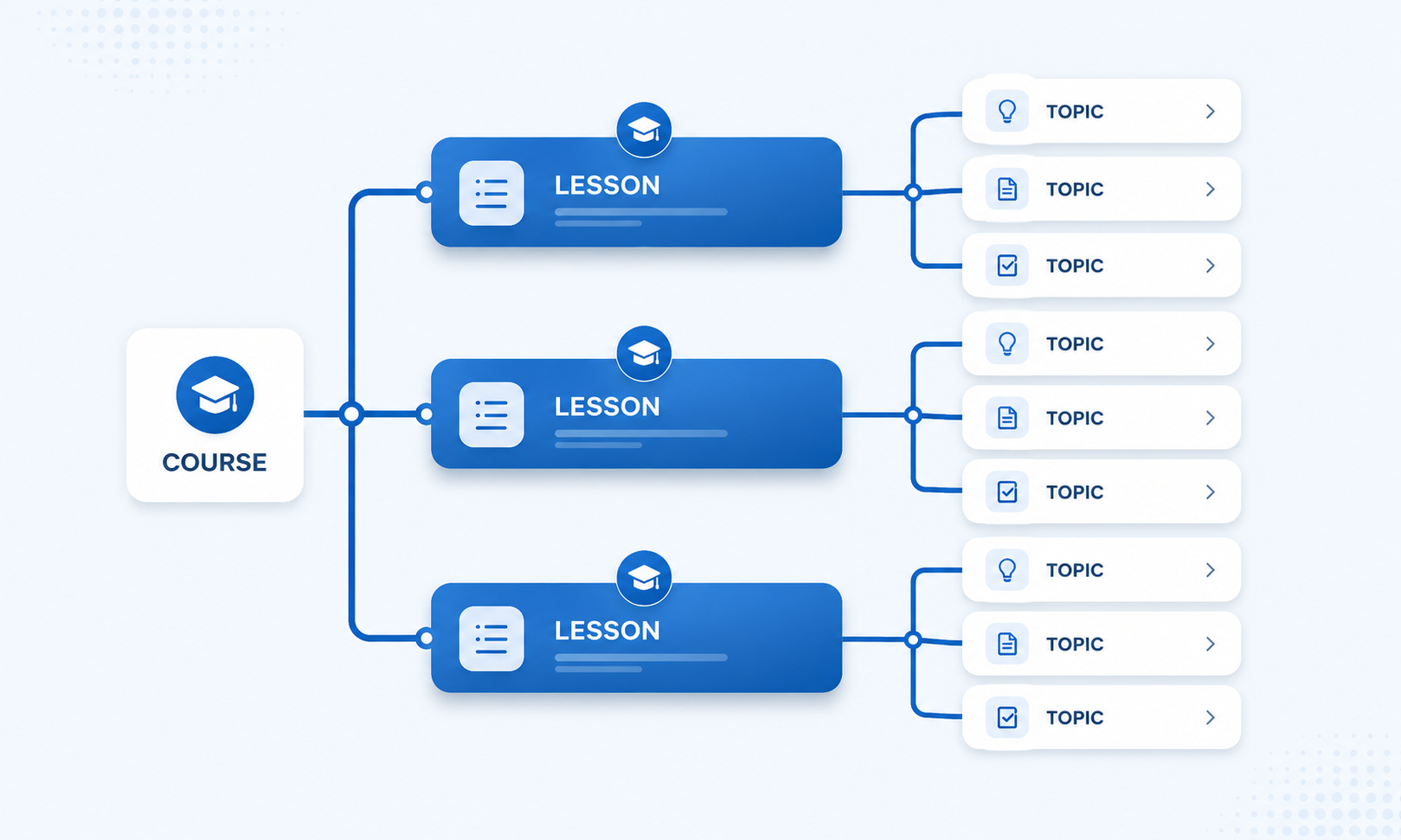
The ideal LearnDash course structure follows a simple hierarchy that guides learners from foundational concepts to advanced topics without creating confusion.
A typical structure includes:
Course → Lessons → Topics → Quizzes → Assignments → Certificate or Completion Requirements
This approach allows learners to progress naturally while giving administrators a consistent framework for future course development.
According to the official LearnDash documentation, organizing content into lessons and topics helps create clear learning pathways and improves course navigation. Similarly, instructional design research from organizations such as the Association for Talent Development (ATD) consistently highlights structured learning experiences as a key factor in learner success.
Why LearnDash Course Management Depends on Good Structure
Many course creators focus heavily on content quality while overlooking organization. However, even excellent content can become difficult to manage if the course hierarchy is poorly designed.
Effective LearnDash course management becomes easier when each lesson serves a specific objective and topics are grouped logically. This reduces administrative complexity and helps instructors maintain consistency across multiple courses.
For example, a healthcare training provider may have dozens of compliance courses that share common modules. Without a clear structure, updating content across multiple learning paths can become time consuming and error prone.
A well organized framework ensures that content updates, learner tracking, and future course expansion remain manageable as your LMS grows.
How to Organize LearnDash Courses for Better Learning Outcomes
The fastest way to organize LearnDash courses is to design the entire learning journey before creating content inside the LMS.
Start by identifying:
- Learning goals
- Major course modules
- Supporting lessons
- Assessment checkpoints
- Completion milestones
When course creators establish this blueprint in advance, learners experience a more predictable and engaging progression.
Educational institutions across North America, Europe, Australia, and Asia frequently use structured learning maps before building online courses. This planning process helps reduce learner confusion while improving knowledge retention.
Research published by EDUCAUSE has repeatedly shown that organized digital learning environments contribute to stronger learner engagement and course completion rates.
Building a Better LearnDash Course Layout for Scalability
A strong LearnDash course layout should not only serve current learners but also support future growth.
Many LMS administrators create courses that work well initially but become difficult to manage after additional lessons, topics, and assessments are added. As content libraries expand, navigation often becomes cluttered and administrative tasks become more complicated.
To avoid this problem, course creators should:
- Maintain consistent naming conventions.
- Keep lesson lengths relatively balanced.
- Group related topics under broader lesson categories.
- Avoid creating unnecessary content levels.
- Standardize layouts across similar courses.
When these principles are applied consistently, both learners and administrators benefit from a more intuitive experience.
How a LearnDash Course Builder Supports Better Course Organization
The LearnDash course builder provides a visual method for organizing course content, making it easier to understand how lessons, topics, and quizzes fit together.
Instead of viewing content as isolated pieces, administrators can manage course relationships more effectively and identify organizational issues before learners encounter them.
This becomes especially valuable for organizations managing large learning programs. Universities, training companies, certification providers, and membership websites often maintain extensive content libraries where structure directly affects usability.
A thoughtfully designed LearnDash course builder workflow helps administrators spend less time reorganizing content and more time improving educational quality.
Common LearnDash LMS Structure Mistakes to Avoid
One of the most common LearnDash LMS mistakes is creating courses without a long term organizational plan.
Many administrators begin with a small number of lessons and gradually add new content whenever needed. While this approach may work initially, it often leads to:
- Duplicate content across courses.
- Inconsistent lesson naming conventions.
- Confusing navigation structures.
- Difficult course maintenance.
- Increased administrative workload.
Over time, these issues can impact learner experience and reduce overall LMS efficiency.
A scalable course structure should anticipate future growth from the beginning rather than requiring major reorganization later.
Advanced Course Builder for LearnDash and Large Course Libraries
As course catalogs expand, managing relationships between lessons, topics, quizzes, and multiple courses becomes increasingly challenging.
The Advanced Course Builder for LearnDash helps solve these challenges by transforming traditional backend course creation into a fast, single screen workflow. Using intuitive drag and drop functionality, administrators can organize curriculum structures more efficiently without navigating through multiple settings pages or dealing with constant page reloads.
For growing LMS platforms, the ability to rename lessons and topics inline, instantly copy complex quiz structures, and move content anywhere within or across courses significantly reduces administrative effort. Training providers, educational institutions, and businesses managing extensive LearnDash environments can make updates faster while maintaining consistent course organization.
By simplifying curriculum architecture and eliminating tedious nesting menus, the Advanced Course Builder for LearnDash enables administrators to build, refine, and launch student ready eLearning experiences in a fraction of the time. This streamlined approach helps maintain organized course structures at scale while improving overall LearnDash course management efficiency.
Best Practices for Long Term LearnDash Course Management
Successful LMS administrators treat course structure as an ongoing strategy rather than a one time setup task.
Regular course reviews help identify outdated content, duplicated lessons, and opportunities to improve navigation. As learner needs evolve, course structures should be updated to reflect changing requirements.
Organizations with mature learning programs often establish internal standards for:
- Course naming conventions.
- Lesson organization.
- Assessment placement.
- Content reuse policies.
- Navigation consistency.
These standards help maintain quality across large learning ecosystems and simplify future development efforts.
Key Elements of a High Performing LearnDash Course
Beyond basic organization, several factors contribute to a successful LearnDash course structure.
Clear Learning Pathways
Learners should always understand where they are in the course and what comes next. A logical progression from introductory concepts to advanced material helps maintain engagement and reduces frustration.
Consistent Content Organization
Using the same lesson formats, naming conventions, and navigation patterns across courses creates a more predictable learning experience. Consistency also makes course administration significantly easier.
Strategic Assessments
Quizzes, assignments, and knowledge checks should be placed at meaningful points throughout the course. Regular assessments help reinforce learning while providing valuable progress data.
Scalable Course Design
Courses should be built with future growth in mind. A scalable structure allows administrators to add new lessons, topics, and learning paths without disrupting the overall organization of the LMS.
Ongoing Course Optimization
Successful course creators regularly review learner feedback, completion rates, and engagement metrics. These insights can reveal opportunities to improve navigation, update content, and strengthen the overall learning experience.
Creating a Course Structure That Scales
A well designed LearnDash course structure does more than improve organization it creates a better learning experience for students while simplifying administration for course creators. By focusing on clear hierarchies, scalable layouts, consistent navigation, and effective LearnDash course management practices, organizations can build learning environments that remain efficient as they grow.
Whether you’re launching a small training program or managing a large LearnDash LMS with hundreds of lessons and topics, investing time in course structure today can save countless hours of maintenance in the future while improving learner success.