

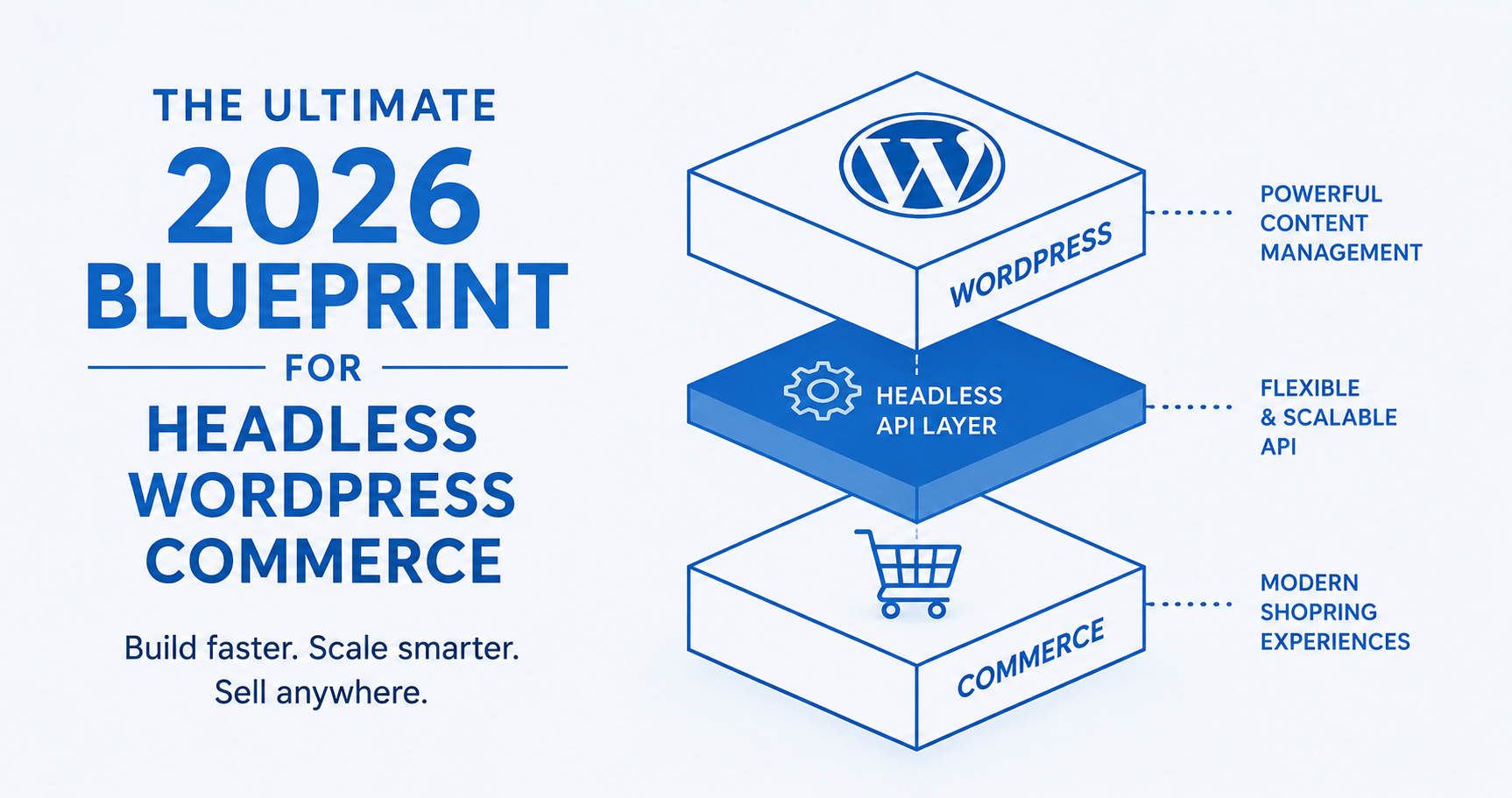
Modern ecommerce is rapidly evolving, and headless WordPress commerce has emerged as one of the most powerful architectures for building fast, scalable, and flexible online stores. In this model, WordPress and WooCommerce manage the backend while a separate frontend delivers high performance shopping experiences.
Businesses adopting headless WooCommerce are moving away from traditional monolithic setups in favor of API driven systems that improve speed, scalability, and omnichannel flexibility. This shift is reshaping how modern ecommerce websites are designed, developed, and optimized in 2026.
Whether you are exploring headless commerce architecture, evaluating WordPress ecommerce development strategies, or trying to understand if this approach fits your business, this guide will break everything down in a clear and practical way.
What Is Headless WordPress Commerce?
Headless WordPress commerce is a modern ecommerce architecture where WordPress and WooCommerce handle the backend operations while a separate frontend framework manages the customer facing storefront.
In a traditional WooCommerce setup, the frontend and backend are tightly connected. In a headless setup, they are decoupled and communicate through APIs like REST API or GraphQL.
This gives businesses significantly more control over performance, scalability, and user experience.
Is WordPress a Headless CMS?
Yes, WordPress can absolutely function as a headless CMS.
When WordPress operates in headless mode, it focuses purely on content management, product management, and backend administration while external frontend technologies display the content to users.
This approach allows developers to build highly customized ecommerce experiences without being restricted by traditional WordPress theme limitations.
How Headless Commerce Architecture Works
A typical headless commerce architecture contains three major layers:
Backend Layer
This includes:
- WordPress
- WooCommerce
- Product database
- Customer data
- Order management
API Layer
The API layer acts as the bridge between the backend and frontend.
Common technologies include:
- WordPress REST API
- WPGraphQL
- WooCommerce API
- GraphQL endpoints
Frontend Layer
The frontend is usually built with:
- Next.js
- React
- Vue.js
- Gatsby
This frontend fetches data from the backend and displays it as a modern ecommerce storefront.
This decoupled structure is what makes headless ecommerce CMS platforms so scalable and flexible.
Traditional WooCommerce vs Headless WooCommerce
Traditional WooCommerce setups are still effective for many businesses, but they can become limiting when advanced customization or enterprise scalability is required.
| Feature | Traditional WooCommerce | Headless WooCommerce |
|---|---|---|
| Frontend Flexibility | Limited | Complete |
| Performance | Moderate | High |
| Scalability | Moderate | Enterprise Level |
| Mobile Optimization | Theme Dependent | Fully Custom |
| Omnichannel Support | Basic | Advanced |
| API Integrations | Limited | Extensive |
Headless WooCommerce offers much greater flexibility for businesses that require fast-loading storefronts, custom interfaces, and multi-platform commerce experiences.
Why Businesses Are Moving to Headless WooCommerce in 2026
The ecommerce landscape in 2026 is heavily focused on speed, personalization, and omnichannel experiences.
Businesses are adopting headless WordPress commerce because it provides the flexibility needed to compete in modern digital markets.
Faster Storefront Performance and Core Web Vitals
Page speed has become one of the biggest ranking and conversion factors in ecommerce.
Modern frontend frameworks like Next.js use advanced rendering techniques such as:
- Static Site Generation (SSG)
- Server Side Rendering (SSR)
- Incremental Static Regeneration (ISR)
These technologies dramatically improve:
- Largest Contentful Paint (LCP)
- First Input Delay (FID)
- Overall Core Web Vitals
Faster stores lead to:
- Better SEO rankings
- Lower bounce rates
- Higher conversion rates
This is one of the primary reasons businesses invest in headless commerce architecture.
Better Scalability for Growing Ecommerce Brands
As ecommerce stores grow, traditional architectures often struggle with:
- High traffic spikes
- Large product catalogs
- Complex user interactions
- Multiple integrations
Headless commerce separates the frontend from backend processing, allowing each system to scale independently.
This makes it easier for enterprise businesses to handle millions of users without sacrificing performance.
Omnichannel Commerce Experiences
Customers no longer shop exclusively through websites.
Modern ecommerce brands must deliver experiences across:
- Mobile apps
- Smart devices
- Social commerce platforms
- In store kiosks
- Voice assistants
Headless ecommerce CMS solutions make omnichannel delivery much easier because APIs can distribute content and product data across multiple platforms simultaneously.
Improved SEO and AI Search Visibility
Search engines increasingly prioritize:
- Fast loading websites
- Structured content
- Mobile performance
- User experience metrics
Headless WordPress commerce supports all of these requirements.
Additionally, AI powered search systems and conversational search tools prefer structured, direct-answer content. Businesses using optimized headless architectures are often better positioned for AI driven discovery.
This is especially important for AEO (Answer Engine Optimization) and GEO (Generative Engine Optimization) strategies in 2026.
The Core Components of a Headless Commerce Architecture
Understanding the core technologies behind headless commerce helps businesses make smarter development decisions.
WordPress as the Headless CMS
WordPress remains one of the most popular CMS platforms because of its:
- Easy content management
- Massive plugin ecosystem
- SEO flexibility
- Publishing workflow
Using WordPress as a headless CMS allows businesses to retain these benefits while gaining frontend flexibility.
Many companies offering WordPress ecommerce development services now specialize in headless implementations because demand continues to rise globally.
WooCommerce as the Ecommerce Engine
WooCommerce powers:
- Product management
- Checkout systems
- Payments
- Orders
- Inventory
In headless WooCommerce setups, the backend still handles all ecommerce operations while APIs deliver product data to the frontend.
This approach combines WooCommerce’s ecommerce power with modern frontend performance.
Frontend Frameworks Like Next.js and React
Modern frontend frameworks play a huge role in headless commerce examples.
Next.js has become especially popular because it supports:
- Hybrid rendering
- SEO optimization
- Dynamic routing
- Performance enhancements
React based storefronts also provide smoother user experiences and highly interactive shopping journeys.
APIs, GraphQL, and Data Delivery
APIs are the backbone of every headless commerce architecture.
Most headless WordPress commerce systems use:
- REST API
- WPGraphQL
- WooCommerce API
GraphQL is particularly popular because it allows developers to request only the data they need, improving efficiency and reducing unnecessary server load.
How to Build a Headless WordPress Commerce Store
Building a successful headless ecommerce platform requires careful planning.
Step 1 – Choose Your Headless CMS Setup
Decide how WordPress will manage:
- Content
- Products
- APIs
- User data
You should also determine whether your store requires:
- Multi language support
- Multi region infrastructure
- Enterprise scalability
Step 2 – Configure WooCommerce APIs
Enable secure API communication between:
- WordPress
- Frontend application
- Third party services
Most headless commerce guide implementations rely heavily on API optimization and authentication security.
Step 3 – Select a Frontend Framework
The frontend framework determines:
- Performance
- SEO capabilities
- User experience
- Scalability
Most businesses choose:
- Next.js
- React
- Vue.js
Next.js currently dominates many modern headless commerce examples due to its SEO and rendering advantages.
Step 4 – Optimize Performance and SEO
Technical optimization is critical for headless commerce success.
Key areas include:
- CDN integration
- Image optimization
- Edge caching
- Structured data
- Schema markup
- Mobile optimization
Businesses also frequently invest in performance optimization services to maximize Core Web Vitals and improve organic visibility.
Step 5 – Deploy and Scale Your Store
Cloud platforms like:
- Vercel
- AWS
- Cloudflare
- Netlify
allow businesses to deploy highly scalable storefronts globally.
Edge delivery networks further improve loading speeds for international users.
Best Headless Commerce Examples in 2026
Many global brands now use headless commerce architecture to improve scalability and customer experience.
Enterprise Ecommerce Stores
Large ecommerce businesses often require:
- Massive product catalogs
- Advanced search systems
- Custom checkout flows
- Regional storefronts
Headless systems provide the flexibility needed for these complex operations.
Subscription Based Brands
Subscription ecommerce brands benefit from:
- Dynamic user dashboards
- Personalized experiences
- API driven billing systems
This makes headless WooCommerce highly effective for recurring revenue businesses.
Multi Region Ecommerce Businesses
International stores often struggle with:
- Localization
- Currency support
- Regional performance
Headless commerce allows businesses to deliver localized storefronts while maintaining centralized backend management.
Common Challenges in Headless WordPress Commerce
Although headless commerce offers significant benefits, it also introduces technical complexity.
Development Complexity
Headless setups require:
- API expertise
- Frontend frameworks
- DevOps management
- Performance optimization
This often increases initial development costs.
Plugin Compatibility Issues
One of the most overlooked challenges in headless WooCommerce development is plugin compatibility. Traditional WordPress plugins are usually designed to work directly with WordPress themes and frontend templates. In a headless environment, many of these frontend dependent features may not function properly because the storefront is powered by a completely separate application.
For example, plugins responsible for:
- Dynamic product filtering
- Wishlist systems
- Frontend popups
- Checkout customizations
- User dashboards
may require additional API integrations or custom frontend development to function correctly in a decoupled architecture.
This does not mean plugins become useless in headless commerce architecture. Instead, developers often need to rebuild certain frontend functionalities using APIs and JavaScript frameworks. Businesses investing in custom WooCommerce development or API first ecommerce solutions usually handle this challenge more effectively by creating scalable custom integrations tailored to their exact needs.
Hosting and Infrastructure Costs
Headless WordPress commerce often requires a more advanced hosting environment compared to traditional WooCommerce websites. Since the frontend and backend operate independently, businesses typically need separate infrastructure for:
- WordPress hosting
- Frontend deployment
- CDN delivery
- API processing
- Edge caching
- Performance monitoring
Modern headless ecommerce CMS setups frequently rely on platforms like Vercel, AWS, Cloudflare, or Netlify to deliver fast global performance. While these services provide exceptional scalability and speed, they can also increase monthly operational costs, especially for high traffic ecommerce stores.
However, many businesses view these additional infrastructure costs as a long term investment rather than an expense. Faster websites often generate:
- Higher conversion rates
- Better search visibility
- Improved customer retention
- Lower bounce rates
In many cases, the increased revenue generated through improved user experience outweighs the additional hosting investment.
Best Tech Stack for Headless WordPress Commerce in 2026
Choosing the right technology stack is one of the most important decisions when building a scalable headless ecommerce platform. The ideal stack should balance performance, flexibility, developer experience, and long-term maintainability.
In 2026, most successful headless commerce examples follow a modern API first architecture built around WordPress, WooCommerce, and JavaScript frontend frameworks.
WordPress + WooCommerce + Next.js
This combination has become one of the most popular headless commerce stacks in the ecommerce industry.
WordPress acts as the headless CMS, WooCommerce powers ecommerce operations, and Next.js delivers the frontend experience. Together, they create a highly scalable system capable of handling advanced ecommerce requirements while maintaining strong SEO performance.
Next.js is especially popular because it supports:
- Server side rendering
- Static site generation
- Incremental static regeneration
- Dynamic routing Advanced
- caching strategies
These features allow businesses to build extremely fast ecommerce storefronts optimized for both users and search engines.